Home / Capabilities

Splitting · Bonding · Finishing

Capabilities

Every process that touches the fabric — splitting the core, bonding the backing, finishing the surface, inspecting before it is wound — runs at the single partner plant we manage. Nothing is handed to a different subcontractor at each stage, and our own inspector signs the roll off before it ships.

Process A

Splitting

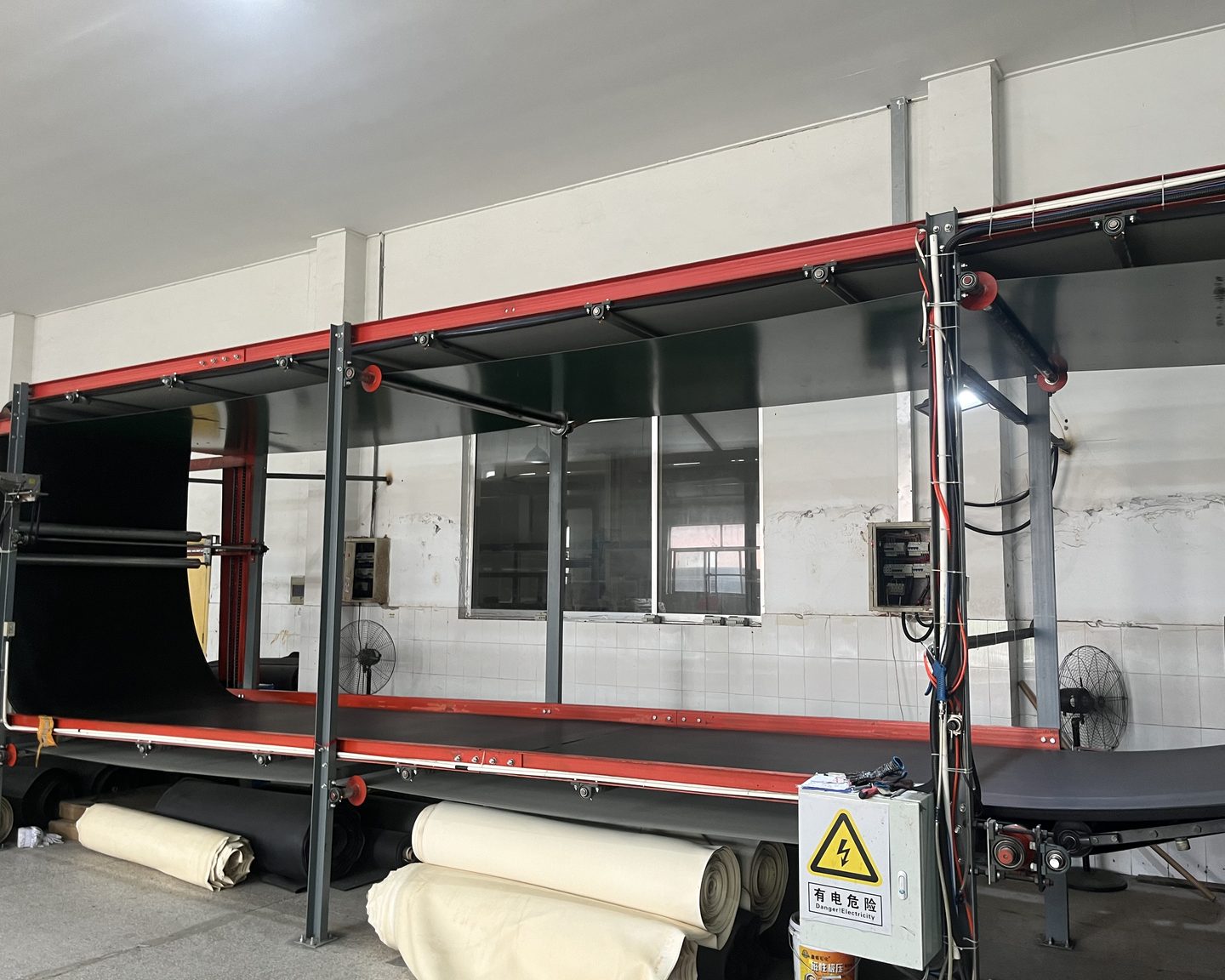
Automatic splitting machine in the partner plant, with un-split material rolls staged beneath the bed

The starting point for almost every order. Neoprene arrives in blocks thicker than anyone wants to use, and the splitter brings it down to the gauge your specification actually calls for.

High-precision automatic splitting

The core is split to the figure on your specification rather than to the nearest stock size. A 3.2 mm requirement gets 3.2 mm, not 3.0 mm with a note asking you to live with it.

Consistent across the width

Thickness is held evenly from selvedge to selvedge. A roll that is 3 mm at the edge and 2.6 mm in the middle is the hidden cause of a lot of cutting-room waste.

Less material paid for

Because the gauge is set at splitting, you are not buying a thicker block than you need. On a running order that difference is usually worth more than the split itself costs.


Bonding is where a laminate is won or lost. Three routes are available and the right one depends on the backing, the core and what the finished article has to survive — not on which line happens to be free that week.

PUR odour-free bonding

The route we specify most often. It gives a strong bond without the solvent smell that normally hangs around neoprene laminate — which matters for anything worn on the body, kept in a bag or shut inside a shipping carton.

Oil-based and water-based compound

Oil-based where the bond has to survive heavy flexing and repeated washing; water-based where a lower-solvent process is preferred. Both run on dedicated compound machines.

The acceptance test

Pull the laminate apart. The knit back should tear before the bond releases. If the layers come apart cleanly, the bond is wrong — whatever the datasheet says. Results are logged against the order.

Process B

Bonding

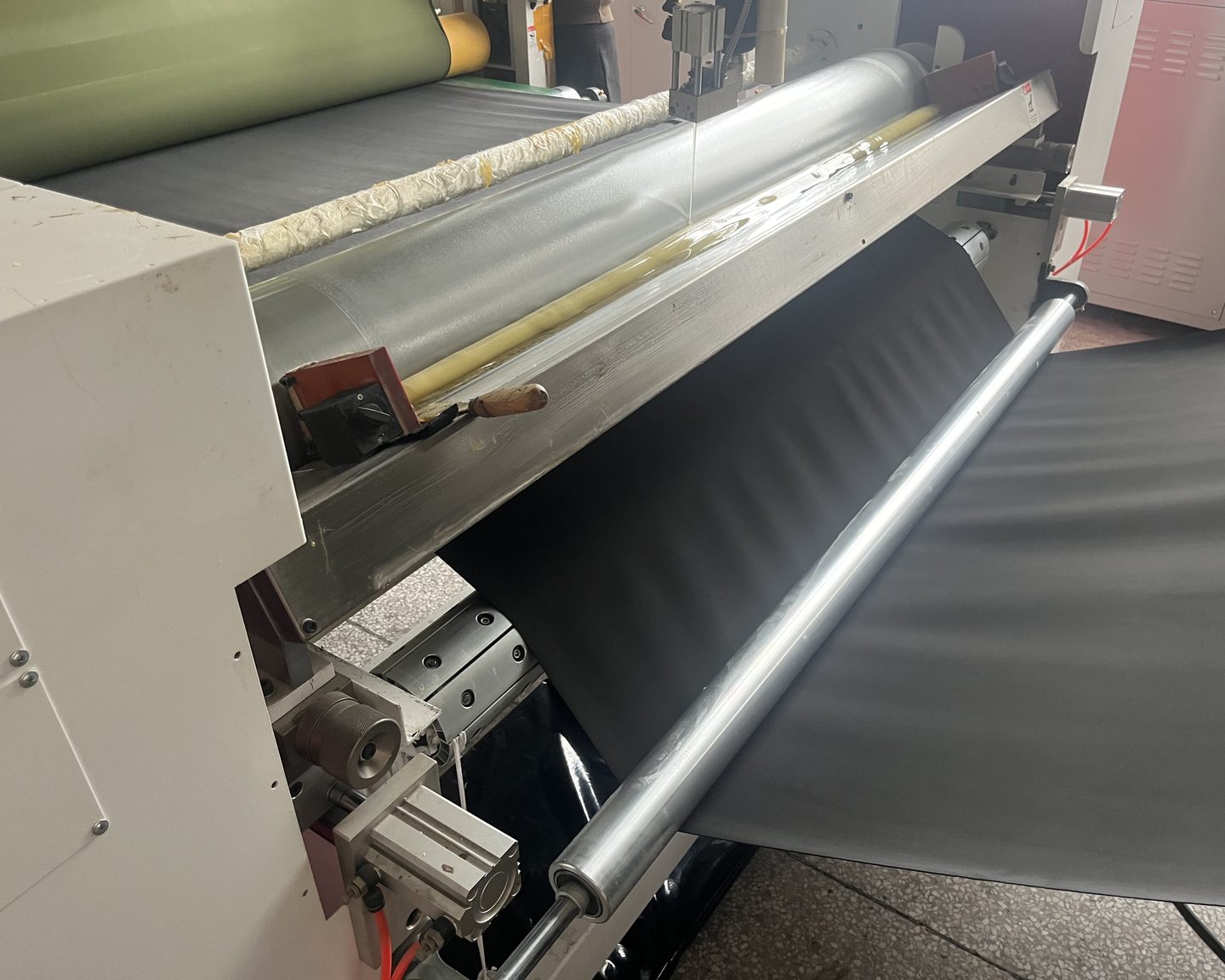
Bonding roller and doctor blade applying adhesive to the neoprene core on the laminating machine

Process C

Surface finishing

The step that decides how the fabric reads in the hand and how it performs. It also does real work: a perforated face breathes, an embossed face grips, a brushed face feels like something more expensive than it is.

Punching and perforating

Holes at the pitch and diameter you specify, for breathability, drainage or weight reduction. Used on breathable dive and sport panels and on liners that have to dry quickly.

Embossing

Raised or grained patterns for grip and appearance — from a tyre-tread anti-slip face to a fine leather grain. The pattern is registered to the roll, so it stays square to the selvedge.

Brushing and smooth skin

Brushing lifts the surface into a soft, suede-like hand. On CR the same equipment finishes the smooth-skin face — sealed, low-friction and water-shedding.


The last step is deciding what shape the order leaves in. Most buyers have a cutting room with its own ideas about how material should arrive, and it costs nothing to supply it that way.

Roll, cut length or slit tape

Full-width rolls, sheets cut to a fixed length, or tape slit to the width your machine feeds. Tell us the format and it arrives in that format — no re-handling at your end.

Thickness and bond check

Gauge is measured across the roll and the bond is pulled before the order is packed. Findings go into the report that ships with the goods.

Batch traceability

Core batch, backing batch and bonding date are recorded against your order number, so a question six months later can be answered with the actual production record rather than a guess.

Process D

Inspection & supply

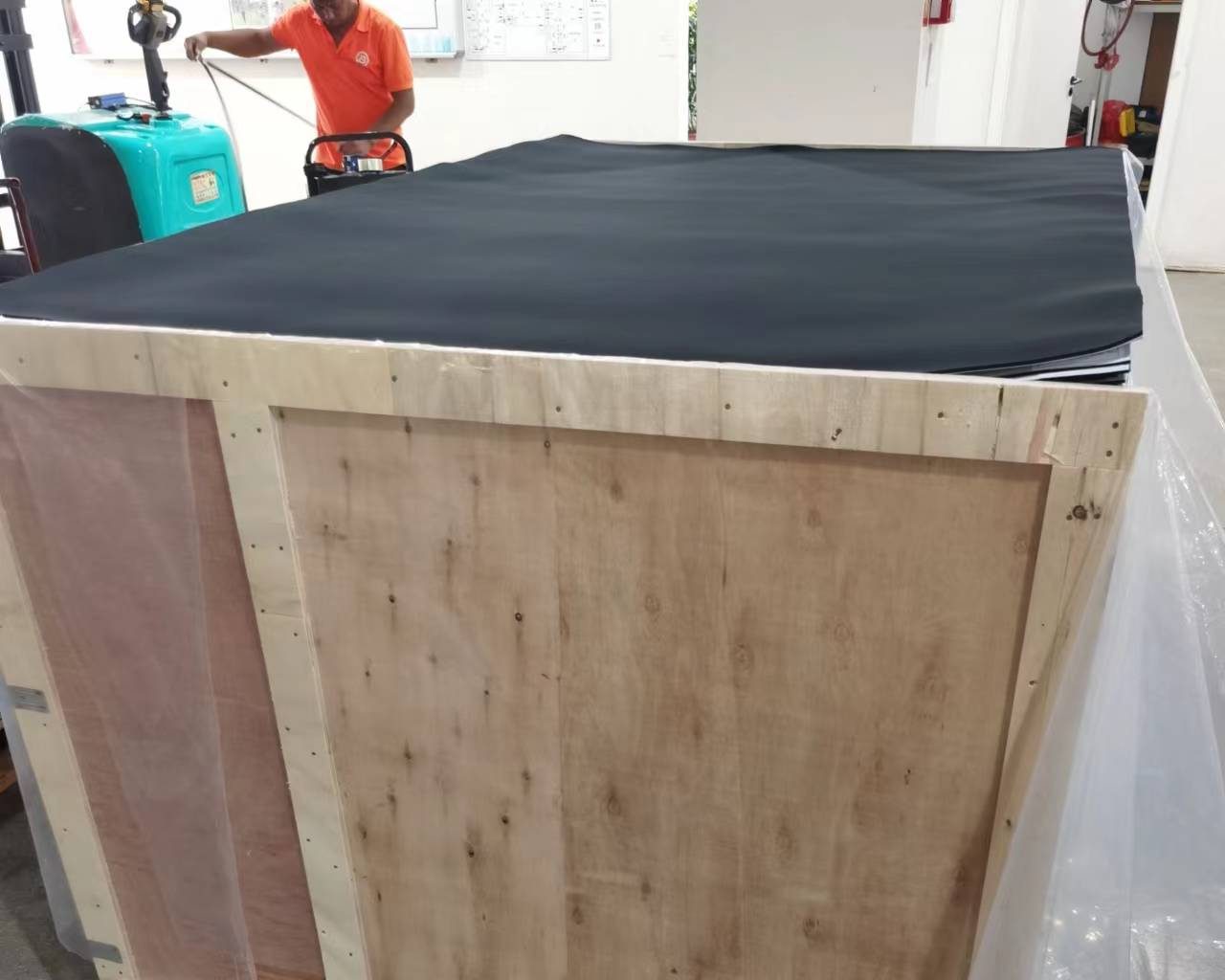
Neoprene sheets packed into an export crate, wrapped in film on a pallet with an operator moving it by stacker truck

Working with us

Two ways to buy.

Either bring a specification or pick from what we already supply. The information we need and the lead time are different for each.

Made to specification

You set the numbers

Thickness, width, core grade, backing, colour and surface finish specified by you and produced to that specification. Useful when the laminate has to match an existing product exactly, or when you have already tested a swatch you want repeated.

  • Send: thickness, core grade, backing, width, surface, quantity

  • We return: swatch or sample, unit price, lead time

Stock range

Pick from what we supply

SBR in 2.0, 2.5, 3.0 and 4.0 mm, bonded to any of our six standard backings. Faster and cheaper than a bespoke build, and the sensible starting point if you are still testing a market.

  • Send: the application and the quantity you expect to run

  • We return: swatches of the closest matches, with prices

Trade terms

How we quote and ship

Quotations itemise material, processing and packing separately, so you can see exactly what changes when you change the specification.

  • Incoterms: EXW, FOB, or your nominated forwarder

  • Payment terms: to be agreed per order

  • Packing: roll, cut length or slit tape, to your format

Quality control

Checked at three points,
not just at the end.

Finding a problem on the loading dock means the material and the processing are already spent. We check during the run instead, at the stages where a fault can still be corrected cheaply.

CHECK 01

Incoming material

Core density and backing weight are checked against the approved sample before anything is cut or bonded.

CHECK 02

In-line

Gauge measured across the roll after splitting, and bond strength pulled at defined intervals during the bonding run. Results logged.

CHECK 03

Pre-shipment

Final gauge, width and visual check on the packed goods, with a written report sent to you before the container closes.

Ready when you are

Tell us what the fabric has to survive.

Salt water, oil, sun, abrasion, repeated flexing, skin contact — the conditions drive the core and the bonding route. Describe them and we will propose the laminate.